
Root Canal Treatment • 8 min read
Painless Root Canal Treatment in Kanpur: What to Expect at The Crown Dental Clinic
Discover how modern rotary endodontics and expert care make root canals virtually pain-free — saving your natural tooth with comfort and confidence.
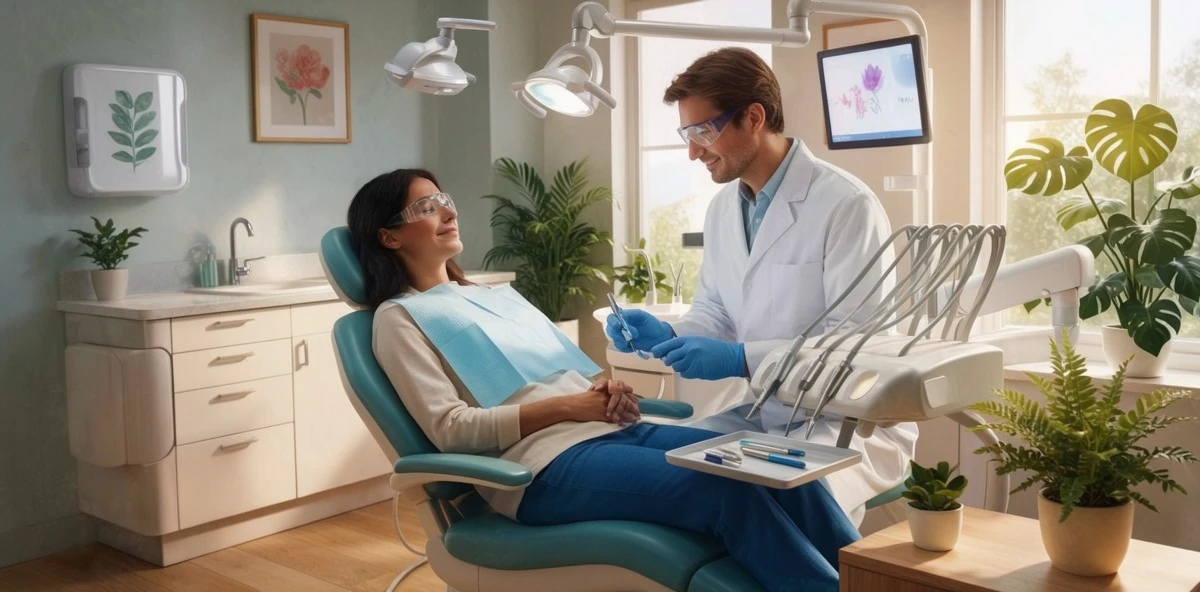
For decades, the words “root canal” have struck fear into the hearts of dental patients across India. The image of excruciating pain, multiple sittings, and endless recovery has been deeply ingrained in popular culture. But here’s the truth that modern dentistry wants you to know: painless root canal treatment in Kanpur is not just a marketing promise — it is a clinical reality made possible by cutting-edge technology, specialised expertise, and a patient-first approach. At The Crown Dental Clinic, we have redefined what it means to undergo endodontic therapy, transforming a once-dreaded procedure into a comfortable, efficient, and virtually pain-free experience that preserves your natural smile for years to come.
1. Introduction to Painless RCT: Busting the Myths
Let’s start by addressing the elephant in the room: the persistent myth that root canal treatment (RCT) is inherently painful. According to the American Association of Endodontists (AAE), root canal treatment today is virtually painless — in fact, many patients report that the procedure feels no different from a routine dental filling. The pain that people associate with root canals is almost always caused by the infection or inflammation in the tooth pulp before the treatment begins, not by the procedure itself.
When the dental pulp — the soft tissue inside your tooth containing nerves, blood vessels, and connective tissue — becomes infected or inflamed due to deep decay, repeated dental procedures, cracks, or trauma, it causes severe, often throbbing pain. The root canal treatment actually relieves this pain by removing the infected pulp, cleaning and disinfecting the root canal system, and sealing the tooth to prevent reinfection. So, rather than causing pain, a root canal treatment eliminates it.
At The Crown Dental Clinic in Kanpur, our approach to painless root canal treatment centres on three pillars: advanced local anaesthesia techniques that ensure complete numbness before any work begins, rotary endodontic technology that makes the procedure faster and gentler, and compassionate care that puts even the most anxious patients at ease. The result? A treatment experience that is calm, controlled, and remarkably comfortable.
Quick Facts About Modern Root Canal Treatment
| Aspect | Traditional RCT | Modern Painless RCT |
|---|---|---|
| Number of Visits | 3–5 visits | 1–2 visits (often single-sitting) |
| Instrumentation | Manual stainless-steel files | Rotary nickel-titanium files |
| Chair Time | 60–90 minutes per visit | 30–45 minutes total |
| Pain Level | Moderate to severe (historically) | Virtually painless |
| Success Rate | ~85% | 95%+ |
2. What is Rotary Endodontics? The Technology Behind Painless RCT
If you’ve been researching painless root canal treatment in Kanpur, you’ve likely come across the term “rotary endodontics.” This is the technological breakthrough that has revolutionised endodontic therapy over the past two decades, and it is one of the core technologies we use at The Crown Dental Clinic.
Rotary endodontics refers to the use of electrically-powered, motor-driven instruments made from a revolutionary alloy called nickel-titanium (NiTi) to clean and shape the root canal system. Unlike traditional manual files made of stainless steel, NiTi rotary files are superelastic — meaning they can bend and flex along the curved paths of root canals without breaking. This flexibility allows the instrument to follow the natural anatomy of the tooth, reducing the risk of ledging, transportation, or perforation of the canal walls.
The motorised handpiece rotates these files at a precisely controlled speed (typically 150–500 RPM), which means the canal is cleaned and shaped far more efficiently than with manual techniques. A study published in the National Center for Biotechnology Information (NCBI) in 2024 noted that “the evolution of root canal instrumentation techniques has significantly impacted the field of endodontics, enhancing both the efficiency and the quality of treatment.” The benefits for the patient are tangible: less chair time, less post-operative sensitivity, and more predictable outcomes.
Traditional vs. Rotary Endodontics: A Comparison
| Parameter | Manual (Stainless Steel) | Rotary (NiTi) | Improvement |
|---|---|---|---|
| Flexibility | Low — rigid | High — superelastic | Significant |
| Canal Cleaning | Push-pull motion | Continuous rotation | Superior |
| Working Time | Long | Significantly shorter | 40–60% faster |
| Risk of Breakage | Moderate | Very low (with proper technique) | Reduced |
| Patient Comfort | Variable | High — gentle and smooth | Excellent |
In addition to rotary files, our clinic utilises advanced apex locators — electronic devices that precisely measure the length of the root canal — and in many cases dental operating microscopes that provide magnified, illuminated views of the canal system. These technologies work in tandem to ensure that every millimetre of the infected pulp is removed, every canal is thoroughly disinfected, and the tooth is sealed with a level of precision that was simply not possible a generation ago.
3. Why Choose a Root Canal Specialist in Kanpur?
Not all dental professionals perform root canals with the same level of expertise. While general dentists can perform basic root canal treatments, an endodontist — a dentist who has completed additional years of specialised postgraduate training focused exclusively on diagnosing and treating issues inside the tooth — brings a depth of knowledge and skill that significantly improves treatment outcomes.
When you search for a root canal specialist in Kanpur, you are looking for a professional who has dedicated their career to mastering the intricate anatomy of the root canal system. Endodontists are trained to handle complex cases that general dentists may refer out: teeth with multiple canals, curved roots, calcified canals, retreatment of previously failed root canals, and teeth with unusual anatomy. Their specialised training, combined with advanced equipment like dental microscopes and 3D imaging, allows them to achieve success rates exceeding 95%.
Figure 1: Root canal treatment success rates — General Dentist vs. Endodontist Specialist (Source: AAE, NCBI studies)
At The Crown Dental Clinic, our team includes professionals with advanced endodontic training who utilise a microscope-enhanced, technology-driven approach. This means that whether you have a straightforward front-tooth root canal or a complex molar with four or more canals, you are in the hands of someone who has seen it all and has the tools to handle it with precision.
- Specialised Training: 2–3 additional years of postgraduate education focused entirely on root canal therapy, dental trauma, and pulp disease diagnosis.
- Advanced Equipment: Dental operating microscopes, electronic apex locators, and rotary NiTi systems that general practices may not have.
- Pain Management Expertise: Endodontists are specifically trained in anaesthesia techniques for even the most challenging cases, including teeth with persistent infection or anatomical complexities.
- Higher Volume of Cases: An endodontist performs significantly more root canals per week than a general dentist, translating to refined skills and muscle memory.
4. The Crown Dental Clinic’s Pain-Free Promise
At The Crown Dental Clinic, our pain-free promise is not a slogan — it is a commitment backed by technology, technique, and a philosophy of care that places your comfort above all else. Here is what you can expect when you walk through our doors for a root canal treatment:
Step 1: Comprehensive Diagnosis. Before any treatment begins, we conduct a thorough examination that includes digital X-rays and, when needed, CBCT (Cone Beam Computed Tomography) 3D imaging. This allows us to visualise the exact anatomy of your tooth’s root canal system, identify the number of canals, detect any hidden infections or cracks, and plan the procedure with precision. You will be fully informed about what is happening inside your tooth and why the treatment is necessary.
Step 2: Comfort-First Anaesthesia. We understand that for many patients, the fear of the needle is the biggest barrier. That is why we use a multi-layered anaesthesia protocol: first, a topical numbing gel is applied to the gum tissue to eliminate any sensation at the injection site. Then, a very thin needle is used to deliver the local anaesthetic slowly and steadily, minimising discomfort. For particularly anxious patients, we can discuss additional sedation options. By the time the procedure begins, the tooth and surrounding area are completely numb — you will feel pressure and movement, but no pain.
Step 3: Rotary Endodontic Cleaning. Once you are comfortable, a dental dam — a thin sheet of rubber — is placed around the tooth to isolate it from saliva and keep the area sterile. Using rotary NiTi instruments driven by a precision motor, the endodontist accesses the pulp chamber, removes the infected tissue, and shapes the canals. An electronic apex locator ensures accurate length measurement, and copious irrigation with antibacterial solutions flushes out debris and disinfects the canal system. The entire cleaning process is smooth, efficient, and typically completed in a fraction of the time required by traditional methods.
Step 4: Sealing and Restoration. After the canals are thoroughly cleaned and shaped, they are filled with a biocompatible material called gutta-percha, which seals the space to prevent future infection. In many cases, a permanent filling is placed in the same visit. A dental crown is then recommended — usually placed at a follow-up visit — to protect the treated tooth and restore its full function. A tooth that has undergone root canal treatment becomes more brittle over time, and a crown acts as a protective shield, allowing you to chew, bite, and smile with confidence for years to come.
The Painless RCT Journey at The Crown Dental Clinic
Figure 2: Typical timeline for a single-sitting painless root canal treatment
“Modern root canal treatment is a safe, painless, and highly effective procedure that removes infection, relieves severe tooth pain, and saves your natural tooth. There is no need to be afraid.”
— Endodontic care consensus, American Association of Endodontists
5. Aftercare and Recovery: What Happens After Your RCT
One of the most common questions patients ask is: “What will I feel after the anaesthesia wears off?” The answer, for the vast majority of patients, is reassuringly simple. According to the American Association of Endodontists and the Cleveland Clinic, most patients recover fully within a few days to a week after root canal treatment. Mild tenderness or sensitivity in the treated area is normal and typically resolves within 24 to 72 hours. This is the body’s natural inflammatory response to the procedure, not a sign of ongoing infection.
Here is a comprehensive guide to aftercare and recovery following your painless root canal treatment at The Crown Dental Clinic:
Recovery Timeline After Root Canal Treatment
| Timeframe | What to Expect | Recommended Actions |
|---|---|---|
| First 2–4 hours | Numbness from anaesthesia; no pain | Avoid eating; don’t bite cheek/lip |
| 24 hours | Mild tenderness; slight swelling possible | Cold compress; OTC pain reliever; soft foods |
| 2–3 days | Tenderness subsiding; chewing sensitivity | Chew on opposite side; warm salt water rinses |
| 1 week | Most discomfort gone; normal function returning | Resume normal diet; maintain oral hygiene |
| 2–3 weeks | Fully healed; ready for permanent crown | Visit clinic for crown placement |
Key aftercare tips for a smooth recovery:
- Avoid hard or sticky foods until the permanent crown is placed. Stick to soft, lukewarm foods like yogurt, soup, mashed potatoes, and smoothies for the first few days.
- Chew on the opposite side of your mouth to protect the treated tooth while it heals and before the crown is placed.
- Maintain gentle oral hygiene — brush and floss as usual, but be gentle around the treated tooth. Rinse with warm salt water (half teaspoon salt in a glass of warm water) 2–3 times daily to promote healing.
- Avoid smoking and alcohol for at least 48 hours after treatment, as they can interfere with healing and increase the risk of complications.
- Take prescribed medications as directed. Over-the-counter anti-inflammatory medications like ibuprofen are usually sufficient for managing any post-operative discomfort.
- Don’t skip the crown — the permanent crown is essential for long-term protection of the treated tooth. Delaying crown placement increases the risk of tooth fracture.
It is important to note that while mild discomfort is normal, severe or worsening pain, significant swelling, or any allergic reaction to medication should be reported to your dentist immediately. At The Crown Dental Clinic, we provide clear post-operative instructions and are always available to address any concerns during your recovery period.
6. Book Your Painless RCT Today
If you are experiencing tooth pain, sensitivity to hot or cold that lingers, swelling around a tooth, or discoloration of a tooth, these may be signs that the dental pulp is infected or inflamed — and that you may need a root canal treatment. The most important thing you can do is not wait. Delaying treatment allows the infection to spread, potentially leading to abscess formation, bone loss around the tooth root, and in severe cases, the need for tooth extraction.
Remember: saving your natural tooth is always preferable to extracting it. A root canal treatment allows you to keep your original tooth, maintain your natural bite, and avoid the need for more extensive and complex procedures like implants or bridges down the line. As the AAE emphasises, “root canal treatment helps remove infection, relieve pain, and most importantly, save your natural tooth.”
At The Crown Dental Clinic in Kanpur, we combine the expertise of trained endodontic professionals, state-of-the-art rotary endodontic technology, and a genuinely compassionate approach to deliver what we promise: a painless root canal treatment experience. From the moment you walk in to the moment you leave with your restored smile, your comfort is our priority.
Don’t let fear keep you from the care you need. Contact The Crown Dental Clinic today to schedule a consultation, and take the first step toward a pain-free, healthy smile that lasts a lifetime.
Key Takeaways
Modern root canal treatment has evolved dramatically from the painful, multi-visit ordeal it once was. With rotary endodontics powered by nickel-titanium instruments, computerised apex locators for precision, dental microscopes for enhanced visibility, and advanced anaesthesia protocols for complete comfort, painless root canal treatment in Kanpur is now a reality. Choosing a qualified root canal specialist in Kanpur — like the team at The Crown Dental Clinic — ensures that you receive care backed by specialised training, advanced technology, and a patient-first philosophy. With proper aftercare and a permanent crown, your treated tooth can serve you faithfully for decades. The message is clear: there is no reason to fear a root canal. There is every reason to save your natural tooth.
Ready to Save Your Tooth, Pain-Free?
Schedule your consultation with The Crown Dental Clinic today and experience the difference that modern, compassionate endodontic care can make.
Book Your AppointmentRelated Articles
Tooth Pain When Biting Down in Kanpur: 4 Common Causes
General Dentistry · 9 min read Tooth Hurts When You Bite Down: Four Common Causes Explained by Kanpur…
Cracked Tooth Repair in Kanpur: Save It or Remove It?
Restorative Dentistry · Kidwai Nagar, Kanpur Cracked Tooth Repair in Kanpur: How a Dentist Decides Between Saving a…
How Do Braces Work in Kanpur? The Biology of Tooth Movement
Orthodontics • 14 min read How Do Braces Work in Kanpur? The biology behind tooth movement — what…