
Root Canal Treatment: What Happens During Care and Recovery
Root canal treatment removes inflamed or infected tissue from inside a tooth, cleans and seals its inner canals, and aims to retain the tooth. Here is what assessment, treatment and recovery commonly involve—and when to contact your dentist.
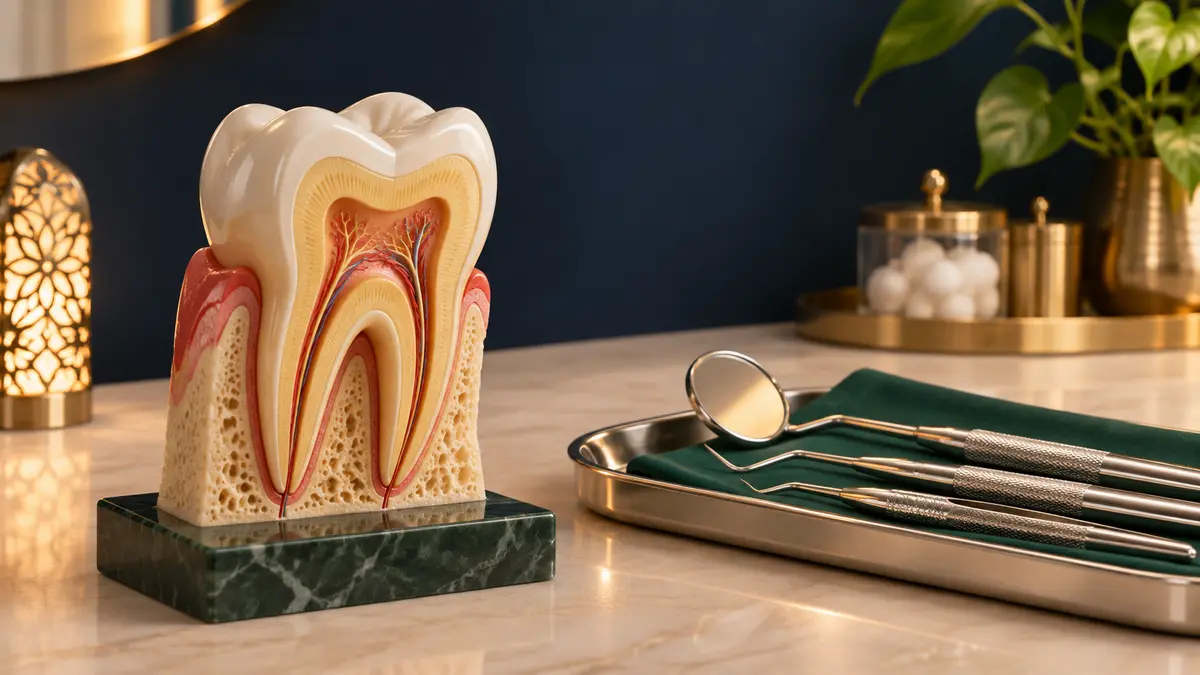
In brief: after examining the tooth and often taking X-rays, a dentist numbs the area, accesses the inner pulp, removes affected tissue, cleans and shapes the canals, then fills and seals them. The tooth may need a permanent restoration—sometimes a crown—afterward. Mild tenderness can occur as numbness wears off; worsening pain, swelling or other concerning symptoms deserve a call to the treating dentist.
Why a dentist may recommend root canal treatment
At the centre of each tooth is soft tissue called pulp, containing nerves and blood vessels. Deep decay, a crack, trauma or repeated dental work can inflame or infect this tissue. A dentist may recommend root canal treatment when examination suggests the pulp cannot recover and the tooth may still be retained with treatment and restoration.
Symptoms vary. Toothache, prolonged sensitivity to hot or cold, pain when chewing, gum swelling or a small gum “pimple” can occur—but symptoms alone do not confirm pulp damage. Some affected teeth cause little or no pain. A dental assessment helps distinguish among possible causes and options.
Root canal care treats the inside of a tooth; it does not replace the outer restoration needed to protect it. Your dentist can explain whether the tooth is restorable, what alternatives exist, and what follow-up is appropriate. Read more about the clinic’s root canal service in Kanpur.
Before treatment: examination and plan
The dentist asks about your symptoms and medical history, examines the tooth and surrounding gums, and may use X-rays to assess the roots and nearby bone. They may check how the tooth responds to testing and whether biting or tapping causes discomfort. These findings help guide diagnosis; no single symptom or test tells the whole story.
Discuss medicines, allergies, pregnancy, health conditions and previous dental treatment. Ask how many visits may be needed, whether a temporary filling will be placed, what restoration is planned, and what to do if pain changes between visits. The number and timing of appointments depend on the tooth and individual clinical findings.
What happens during the root canal procedure?
Care varies by tooth, anatomy and diagnosis. In a common approach, local anaesthetic numbs the area. The dentist isolates the tooth—often with a dental dam—and makes an opening to reach the pulp chamber and canals. You should tell the dentist if you feel discomfort; they can pause and assess whether more anaesthetic or another adjustment is needed.
Access
A small opening provides a route to the tooth’s inner chamber and canals.
Clean and shape
Damaged pulp is removed; canals are cleaned, shaped and disinfected.
Fill and seal
Canals are filled and sealed. A temporary or permanent restoration closes the opening.
Some cases require medication inside the tooth and a temporary seal before a later visit; others may be completed in one appointment. If treatment is staged, keep the follow-up appointment and avoid chewing hard foods on a tooth with a temporary filling unless your dentist advises otherwise.
After the inner canals are treated, the tooth still needs a durable outer restoration. Depending on remaining tooth structure, tooth position and bite, the dentist may recommend a filling or a crown. A crown is not automatic for every case; ask why a particular restoration suits your tooth and when it should be completed.
Root canal recovery: what to expect
Your mouth may stay numb for a few hours after local anaesthetic. Avoid chewing while numb to reduce the risk of biting your cheek, tongue or lip. When sensation returns, mild tenderness around the treated tooth or jaw can occur for a few days, especially when biting. Recovery differs, and your dentist’s instructions take priority.
- Follow the dentist’s instructions for pain relief; check before starting any medicine if you have health conditions, allergies, are pregnant, or take other medicines.
- Choose softer foods if chewing feels uncomfortable, and avoid biting hard or sticky foods with a tooth that has a temporary filling.
- Brush and clean between teeth gently, taking care around the treated area.
- Attend planned visits so the temporary seal can be checked and definitive restoration completed.
Contact the clinic if discomfort is not settling, returns after improving, or the tooth feels unusually high when you bite. A dentist can check the bite, restoration and healing rather than relying on symptoms alone. Do not stop or start prescribed medicines without professional advice.
When symptoms need prompt dental assessment
Contact your dentist promptly for severe or increasing pain, visible swelling inside or outside the mouth, fever, a return of the original symptoms, a lost temporary filling, or a bite that feels uneven. These signs need professional assessment; they do not by themselves identify the cause.
Seek urgent medical care for difficulty breathing or swallowing, rapidly spreading facial or neck swelling, or feeling seriously unwell. Do not wait for a routine appointment if breathing or swallowing is affected.
If you are in Kanpur and considering treatment, contact The Crown Dental Clinic to ask about an individual dental assessment. You can also read what to expect at the clinic; your own treatment plan depends on examination.
Further reading
General patient information; it cannot diagnose a tooth or replace advice from your dentist.