Oral Hygiene & Preventive Care · 7-minute read
What Is Tooth Enamel? How This Outer Layer Protects Teeth
Tooth enamel is the hard, mineral-rich covering on each tooth crown. Learn its structure, protective role, causes of wear, and practical ways to preserve it.
Clinically reviewed educational information · For diagnosis or individual advice, consult a dentist.
Tooth enamel, explained at a glance
A mineral shield, not a living tissue
Enamel is the hard outer covering of the visible tooth crown. It protects the softer dentin and the pulp beneath from everyday contact, temperature changes, acids, and chewing forces. Mature enamel contains no living cells, so it cannot grow back once physically lost.
Key distinction
Early mineral loss may be arrested or partly remineralised. A cavity, chip, or significant erosion is structural damage and needs professional assessment.
Where it sits
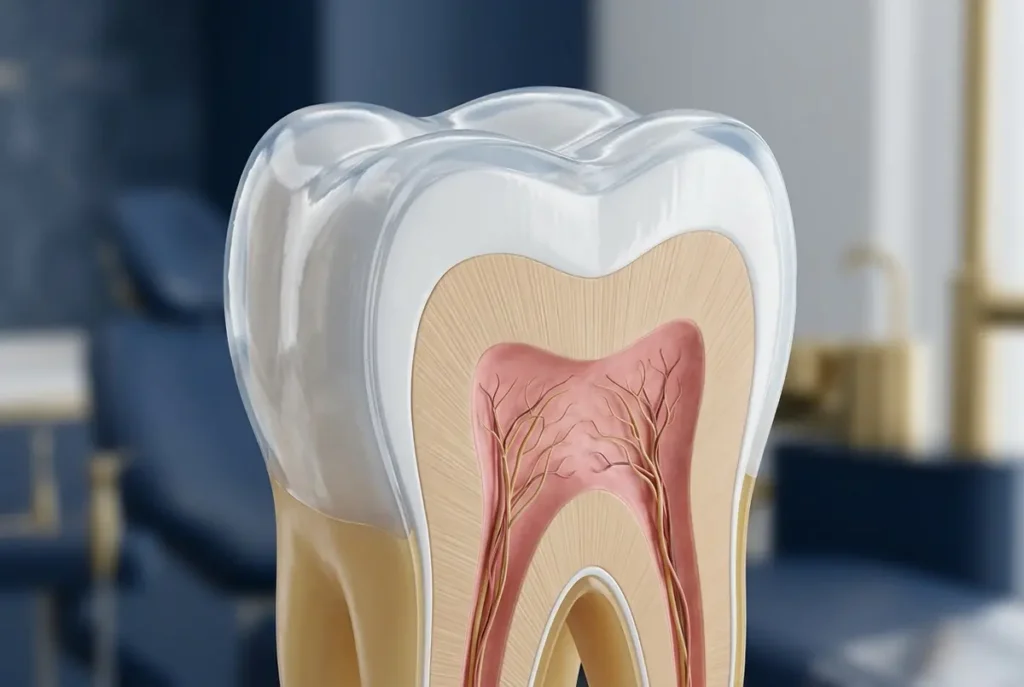
Enamel covers the crown above the gumline. Cementum covers the root; dentin lies beneath enamel and carries microscopic tubules toward the pulp.
Takeaway
Protect enamel by reducing repeated acid exposure, using fluoride toothpaste, cleaning gently, and addressing causes such as reflux or teeth grinding with dental guidance.
What tooth enamel is made of
Enamel is the highly mineralised outer tissue of the tooth. Its mineral is mainly calcium-phosphate crystals organised largely as hydroxyapatite. A small proportion consists of water and organic material. This dense arrangement makes enamel exceptionally hard, but hardness does not mean it cannot crack, abrade, or dissolve in acid.
At microscopic scale, mineral crystals are arranged in enamel prisms (also called rods) and the material between them. Their organised pattern helps the crown withstand routine biting and chewing. Enamel is not a uniform shell of identical thickness: it is shaped to each tooth and is generally thickest over biting surfaces and thinner near the neck of the tooth. The underlying dentin supports it. If that support is lost through decay or a large fracture, enamel can chip more readily.
Enamel forms while teeth develop, before eruption. The cells that produce it, ameloblasts, are no longer present on erupted teeth. That biological detail explains why enamel cannot regenerate like skin or bone. It also explains why brushing, rinses, and remineralising products can support mineral balance at an early stage but cannot rebuild a missing piece of tooth.
Clinical note: hardness is not invulnerability
Enamel must be understood as a strong surface supported by dentin, not as an unbreakable coating. Acid softening, repeated friction, heavy bite forces, and pre-existing defects can interact. A dentist assesses the cause and pattern of wear before recommending treatment; the same-looking change can have different causes.
Tooth enamel function: how enamel protects teeth
When people ask, “what is tooth enamel and how does it protect teeth,” the short answer is that enamel forms the first line of defence for the tooth crown. It helps bear contact during chewing and limits direct exposure of the more sensitive inner tissues to foods, drinks, temperature changes, and oral bacteria. It does not make a tooth immune to decay: acids can remove minerals from enamel, and damage can progress if the balance between mineral loss and repair remains unfavourable.
Enamel’s protection works alongside saliva, gums, dentin, and daily cleaning. Saliva moistens oral tissues, clears food debris, buffers acids, and supplies calcium and phosphate ions that can help replace minerals lost during early demineralisation. Fluoride from toothpaste or professionally applied products can strengthen the mineral surface and support resistance to acid attack. These defences work best when acid challenges are not frequent and plaque is regularly disrupted.
Enamel also shapes the visible colour and contour of a tooth. It is naturally translucent, so the colour of underlying dentin contributes substantially to how a tooth appears. As enamel thins, teeth may look more yellow because more dentin shows through; edges may appear translucent, and surfaces may become smoother or cupped. Appearance alone cannot confirm the cause, so a clinical examination matters.
| Layer | Location and structure | Main role |
|---|---|---|
| Enamel | Hard, mineral-rich outer crown covering | Resists routine wear and shields inner crown tissues; vulnerable to acid dissolution and fracture |
| Dentin | Layer beneath enamel; contains microscopic tubules | Supports enamel and forms much of tooth body; exposure may cause sensitivity |
| Pulp | Central soft tissue with nerves and blood vessels | Provides nourishment and sensory response while tooth develops and remains vital |
| Cementum | Thin covering of tooth root | Helps attach periodontal ligament fibres to root surface |
Everyday factors that can wear or weaken enamel
Enamel wear is often gradual and has more than one contributor. Recognising common exposures helps people make realistic changes without blaming themselves. A dentist can distinguish chemical erosion, decay, abrasion, and tooth-to-tooth wear by examining the shape, location, history, and symptoms.
Acid erosion
Acids from frequent soft drinks, citrus, sour sweets, or other acidic foods can dissolve mineral directly. Stomach acid from reflux or recurrent vomiting can also contribute. Frequency and duration of exposure matter, not only the total amount.
Tooth decay
Plaque bacteria use fermentable carbohydrates and produce acids. Repeated acid episodes can pull minerals from enamel, creating a weakened area. If mineral loss progresses, a cavity may form; brushing alone cannot restore a formed cavity.
Friction and force
Aggressive brushing with a hard-bristled brush, abrasive products, nail biting, or chewing hard objects can contribute to mechanical wear. Clenching and grinding can flatten biting surfaces or cause cracks, especially over time.
Dry mouth and individual factors
Reduced saliva weakens natural buffering and mineral support. Some medicines and medical conditions can reduce saliva. Enamel development defects, gum recession, and previous dental work may also change where sensitivity or wear appears.
Acid-softened enamel can be more susceptible to brushing abrasion for a period after exposure. After an acidic drink or episode of reflux, rinse with water and wait before brushing; ask a dentist for advice if acid exposure is frequent. Persistent reflux or vomiting deserves medical attention as well as dental discussion.
How to reduce enamel wear and support remineralisation
01 · Brush gently
Brush twice daily with a soft-bristled brush and fluoride toothpaste. Use light pressure and a controlled technique. Clean between teeth daily with floss or another suitable interdental aid.
02 · Reduce acid frequency
Keep acidic drinks and snacks to mealtimes where practical; avoid sipping them repeatedly over long periods. Choose water between meals. Rinse with water after acid exposure and delay brushing.
03 · Support saliva
Drink water regularly. If dry mouth persists, discuss its cause and safe management with a clinician or dentist; do not stop prescribed medicine without medical advice.
04 · Address risk factors
Ask about grinding, reflux, frequent vomiting, sensitivity, or visible surface changes. A dentist may recommend targeted fluoride, protective measures, monitoring, or restorative care based on findings.
Fluoride helps reduce demineralisation and supports remineralisation of early mineral changes. It does not replace missing enamel. Do not use harsh home remedies, abrasive powders, or acidic whitening mixtures; they can worsen wear. Whitening products may cause temporary sensitivity and are not a treatment for enamel loss. Seek professional guidance before using them if teeth are sensitive or surfaces look worn.
At The Crown Multispeciality Dental Clinic & Implant Center in Kidwai Nagar, Kanpur, patients can discuss tooth sensitivity, visible wear, and preventive options with the dental team. An examination is needed to identify cause and decide whether monitoring or treatment is appropriate.
When to seek dental advice
Arrange an assessment if you notice ongoing sensitivity to cold, heat, sweets, or brushing; a chipped or cracked edge; a new rough area; yellowing with thinning or transparency; pits or grooves; or pain when biting. These signs do not prove enamel erosion, but a dentist can check for decay, cracks, exposed dentin, gum recession, and other causes. Early evaluation can clarify what is happening and prevent avoidable progression.
Seek prompt care for severe or worsening pain, facial swelling, fever with dental symptoms, or a broken tooth. If symptoms include difficulty breathing or swallowing, seek emergency medical care. Do not rely on appearance alone or wait for severe pain: early decay and erosion can be painless.
A reassuring perspective
Not every colour change means enamel is failing, and sensitivity can have several explanations. A dental examination can identify whether the surface is intact, whether mineral changes are early, and whether a protective or restorative approach is needed. The goal is to preserve healthy tooth structure wherever possible.
Frequently asked questions about tooth enamel
Can tooth enamel grow back?
No. Mature enamel has no living cells to rebuild lost tissue. Early mineral loss may be partly remineralised with help from saliva and fluoride, but a cavity, chip, or area of significant erosion cannot be regrown and may need dental treatment.
Does fluoride repair damaged enamel?
Fluoride supports the mineral balance of enamel and helps make it more resistant to acid. It can help manage early non-cavitated mineral changes, but cannot replace missing enamel or fill a cavity. A dentist can assess the stage of damage.
Does sensitivity always mean enamel erosion?
No. Sensitivity may relate to exposed dentin, gum recession, decay, cracks, recent dental treatment, or other factors. Persistent or localised symptoms should be assessed instead of self-diagnosed.
Should I brush immediately after an acidic drink?
Rinse with water first and wait before brushing. Acid can temporarily soften the surface, and immediate brushing may add abrasion. If acid exposure happens frequently, discuss prevention with a dentist.
Concerned about sensitivity or enamel wear?
Book a dental assessment to understand cause and protect remaining tooth structure. The Crown Dental Clinic serves patients in Kidwai Nagar and across Kanpur.
Clinic: 133/105 O Block Site No.1, Kidwai Nagar, Kanpur, opposite Bandhan Bank · +91 87075 04822
Further reading
More oral health articles
Explore more practical oral health guidance from The Crown Dental Clinic.